31 August 2026
Energy Management for Business: Energy Management & Power Optimisation
Energy Management for Business: Energy Management & Power Optimisation
ENERGY MANAGEMENT FOR BUSINESS | POWER OPTIMISATION | PRACTICAL ELECTRICAL ADVICE
Energy is an essential business cost. Whether you operate an office, warehouse, factory, retail premises or commercial property, the way your site uses electricity can affect operating costs, equipment performance, carbon reporting and future expansion plans.
However, effective energy management is not simply about switching lights off or installing solar panels. It is about understanding how electricity is used across your site, identifying avoidable consumption and making informed improvements that fit your operation.
At UK Renewable & Electrical Solutions Ltd, we help businesses review their energy use, electrical infrastructure and future requirements. Our approach can include energy monitoring, power-quality reviews, commercial solar, battery storage, EV charging, intelligent lighting, heating controls and wider electrical contracting.
We are a family-run company based in Tamworth, serving businesses across Staffordshire, the Midlands and nationwide throughout the UK. We are electricians, not salespeople, so our advice is based on your building, your equipment and your practical priorities.
What is energy management for business?
Energy management is the structured process of monitoring, controlling and improving the way your business uses energy.
It can involve:
- Measuring electricity consumption and demand
- Identifying inefficient equipment or operating patterns
- Reducing unnecessary consumption
- Avoiding avoidable demand peaks
- Scheduling equipment more effectively
- Making better use of solar generation
- Charging batteries and electric vehicles at suitable times
- Improving lighting and heating controls
- Reviewing electrical capacity and system condition
- Monitoring performance after improvements are made
The objective is not to reduce energy use at the expense of productivity, comfort or safety. A well-designed strategy should support your operation while helping you make better use of the electricity you buy and generate.
Results depend on many factors, including your building, operating hours, equipment, tariff, demand profile, system design and energy prices. A professional review provides a more reliable basis for deciding which improvements are worthwhile.
Why monitoring and data matter
Without useful data, it can be difficult to understand where your energy costs are coming from.
A monthly electricity bill may show how much energy has been used, but it usually does not explain:
- When your highest demand occurs
- Which equipment is responsible for significant loads
- Whether consumption continues outside working hours
- How much energy is being used by different areas of a site
- Whether solar generation matches your operating pattern
- When EV charging adds to site demand
- Whether unusual consumption could indicate a fault or control issue
Energy monitoring can provide a clearer view. Depending on the site and the agreed scope, this may include metering, data collection, half-hourly consumption information, load monitoring and electrical testing.
Once the data has been reviewed, we can help identify patterns and practical areas for investigation. This may reveal opportunities such as changing equipment schedules, improving controls, staggering start-up times or considering on-site generation and storage.

Managing demand and avoiding unnecessary peaks
Energy consumption and energy demand are related, but they are not the same.
Consumption is the total amount of electricity used over a period. Demand is the rate at which electricity is being used at a particular time. A business can have a high demand peak when several energy-intensive systems start or operate together.
Examples may include:
- Compressors and machinery starting at the same time
- Heating and ventilation equipment operating together
- Several electric vehicle chargers running simultaneously
- Warehouse equipment being switched on at the beginning of a shift
- Refrigeration and process equipment creating a large combined load
- Battery systems charging while other high-demand equipment is operating
Demand management aims to control these patterns without disrupting essential work. Practical measures may include:
- Staggering equipment start-up
- Scheduling non-critical loads for quieter periods
- Using smart EV charging controls
- Charging batteries at suitable times
- Adjusting heating, cooling and ventilation schedules
- Prioritising essential equipment during periods of high demand
- Reviewing whether existing electrical capacity is being used effectively
Where suitable, an energy management system or building management system may help automate some of these decisions. The right approach depends on your equipment, controls, processes and tolerance for interruption.
Load shifting and time-of-use tariffs
Some businesses can benefit from moving flexible electricity use away from more expensive or busy periods. This is known as load shifting.
Potentially flexible loads might include:
- EV fleet charging
- Battery charging
- Water heating
- Certain heating or cooling cycles
- Pumping and processing equipment
- Non-urgent production tasks
- Overnight or out-of-hours equipment operation
Time-of-use tariffs may make this approach more relevant, but a tariff should not be selected in isolation. The best option depends on your actual demand profile, operating hours, contract and the flexibility of your equipment.
Our role is to help you understand the electrical and technical considerations. We do not assume that every business should change its tariff, install a battery or move its operations. The starting point should be reliable information about how the site actually works.
Using commercial solar and battery storage together
Commercial solar PV can help a business generate electricity on-site, particularly where there is useful daytime consumption. Offices, warehouses, factories, retail premises and other commercial properties may all have different opportunities and constraints.
A professional design should consider:
- Roof condition and available area
- Orientation, shading and panel layout
- Existing electrical infrastructure
- Site demand during daylight hours
- Export limitations and connection requirements
- Planned changes to the property
- Maintenance access and safe working arrangements
- Future battery storage or EV charging
Battery storage can hold electricity for use later. This may allow a business to make better use of surplus solar generation or manage when electricity is imported from the grid. In some situations, batteries may also support demand management.
The correct battery capacity and control strategy depend on your load profile, solar system, tariff, available space and electrical installation. A larger battery is not automatically a better investment. It needs to be designed around how your business uses energy.
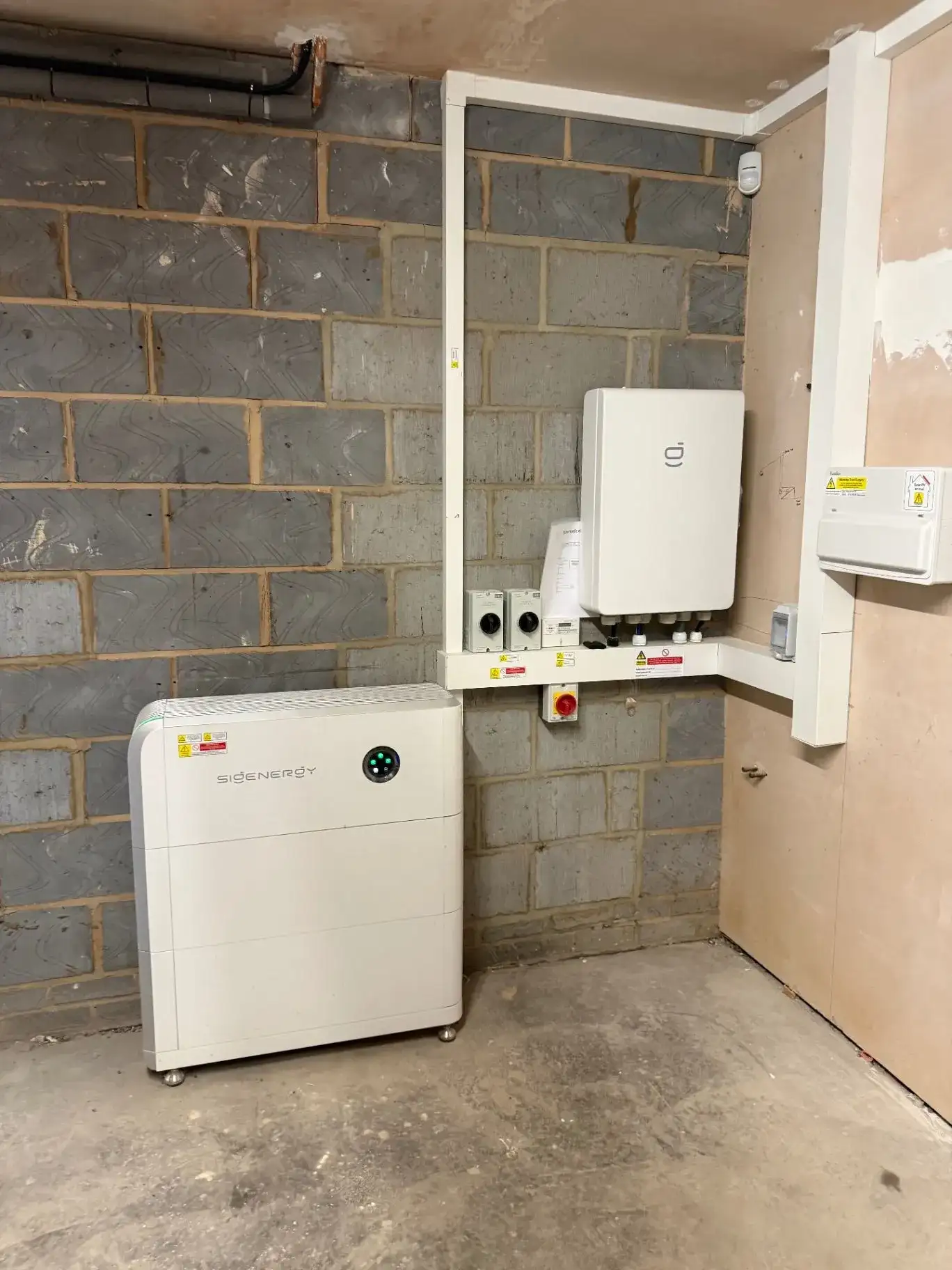
Our renewable installation work is MCS certified, and we use trusted hardware selected around the requirements of the project. Any recommendation remains subject to site assessment, design and final quotation.
Intelligent lighting and heating controls
Lighting and heating can be significant areas of avoidable consumption, particularly in buildings with varying occupancy.
Intelligent lighting systems can help businesses manage illumination according to how spaces are being used. Possible features include:
- Occupancy sensors
- Daylight-responsive controls
- Timed operation
- Zoning
- Central control
- Improved scheduling
- More efficient fittings
In a warehouse, lighting can be arranged around aisles, storage areas and working zones. In an office, controls can help match lighting to occupancy and available daylight. Retail and commercial premises may need a different balance between presentation, comfort and efficiency.
Heating controls can also help match heating operation to building use. Timetables, zoning and appropriate temperature control can reduce unnecessary operation while maintaining suitable working conditions.
Controls need to be commissioned properly. A system that is installed but poorly configured may not deliver its intended benefit and can become difficult for staff to use.
EV fleet charging and site capacity
Businesses are increasingly planning workplace and fleet EV charging as part of their wider energy strategy.
Installing chargers without reviewing the site supply can create avoidable challenges. A proper assessment should consider:
- The number and type of vehicles
- Daily mileage and return times
- Required charge levels
- Existing site demand
- Available electrical capacity
- Cable routes and charger locations
- Future fleet expansion
- Solar and battery integration
- Smart charging and load management
Smart charging can allow vehicles to charge according to a timetable, available capacity or operational priority. For example, vehicles required early in the morning may need to be prioritised, while others can charge later during a lower-demand period.
Where appropriate, EV charging can be coordinated with solar PV and battery storage. This may help a business use more of its generated electricity, although the outcome depends on vehicle schedules, solar production, battery operation and the site’s overall demand.
Power factor and power quality
Power factor and power quality are relevant to some commercial and industrial sites, particularly those with motors, drives, machinery, refrigeration, welding equipment or other non-linear loads.
Power factor relates to how effectively electrical power is being used. Poor power factor can affect apparent power demand and, depending on the supply arrangement, may contribute to capacity or reactive power costs.
Power-quality issues may include:
- Harmonics
- Voltage fluctuations
- Phase imbalance
- Voltage disturbances
- Electrical noise
- Equipment-related instability
These issues are not present on every site and should not be assumed without testing. Where relevant, electrical monitoring and power-quality testing can help identify whether further investigation is needed.
Improving power quality may support equipment reliability and help businesses understand whether electrical infrastructure is suitable for new machinery, solar, batteries or EV charging. Any corrective work should be properly designed and installed by qualified electrical professionals.
Electrical infrastructure, maintenance and commissioning
Energy management depends on the condition and capability of the electrical system supporting it.
Before adding new loads or generation, businesses may need to review:
- Distribution boards
- Cabling and protective devices
- Metering arrangements
- Earthing and bonding
- Isolation and access
- Available capacity
- Existing faults or defects
- Protection settings
- Future expansion requirements
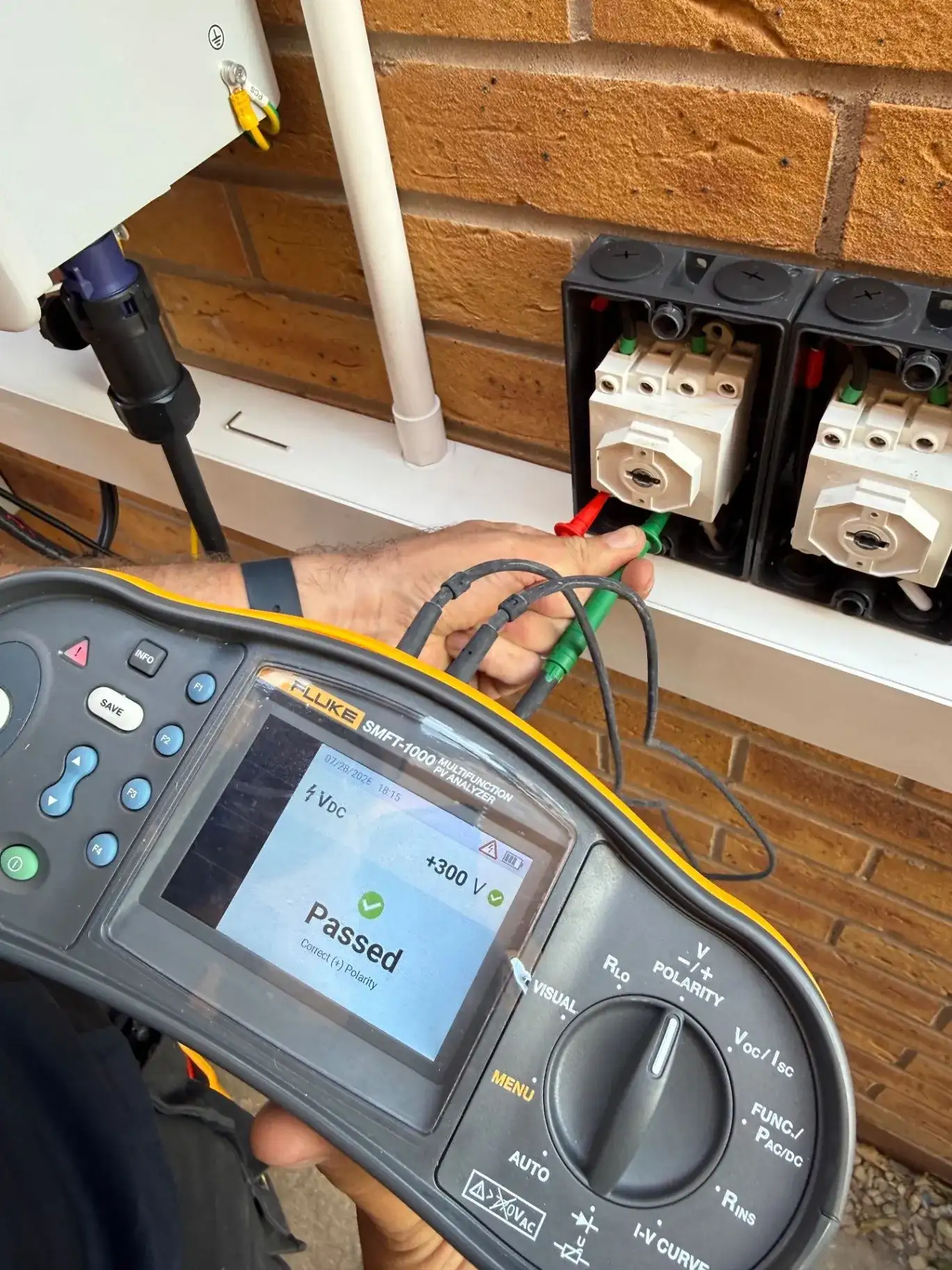
Our NICEIC-approved electrical contracting team provides commercial and industrial electrical services, including warehouse distribution boards, electrical design, drawings, testing, commissioning, lighting, heating controls and security systems.
Commissioning is an important stage of the work. It confirms that the agreed system has been installed, tested and configured correctly. It also provides an opportunity to explain controls, monitoring and practical operation to the people responsible for the building.
Ongoing monitoring, maintenance and aftercare can then help identify changes in performance or new requirements as your business develops.
Practical steps your business can take
A sensible energy management plan can begin with a straightforward review:
Collect your energy information
Gather bills, meter data, operating hours and details of major equipment.Understand your site’s demand profile
Identify when demand is highest and whether significant use occurs outside normal hours.Walk through the building
Look for lighting, heating, ventilation and equipment operating when areas are unoccupied.Review flexible loads
Consider whether EV charging, battery charging or other non-critical loads can be scheduled.Check the electrical infrastructure
Confirm whether the existing system is suitable for planned changes or additional equipment.Consider solar and battery storage
Compare generation and storage opportunities with the site’s actual demand pattern.Improve controls and commissioning
Make sure lighting, heating, charging and other systems are set up for the way your business operates.Monitor performance afterwards
Review data regularly and investigate unexpected changes rather than relying on assumptions.
Why a professional survey matters
Every business site is different. Two warehouses may have different roof areas, shifts, machinery, tariffs and electrical supplies. Two offices may have completely different occupancy patterns and heating requirements.
A professional site survey helps connect the technical proposal to the real operation. It can include reviewing the building, electrical infrastructure, equipment, energy information and future plans.
At UK Renewable & Electrical Solutions Ltd, our team has more than 50 years of combined internal electrical experience. We provide practical advice, clear quotations and detailed planning before installation work is agreed.
We are MCS certified for renewable installation work and a NICEIC-approved electrical contractor. These credentials support the relevant areas of our service, but they do not guarantee savings or make every technology suitable for every business. The design, installation, operation and site conditions all matter.
Energy management for businesses across the UK
Whether you need a first review of your electricity use, commercial solar, battery storage, EV fleet charging or wider electrical work, we can help you consider the options in the right order.
We support businesses in Tamworth, Staffordshire, the Midlands and nationwide across the UK with:
- Energy monitoring and power optimisation
- Commercial and industrial solar PV
- Battery storage solutions
- EV charger installation
- Intelligent lighting
- Heating controls
- Warehouse and industrial electrical systems
- Electrical design, drawings and commissioning
- Testing, monitoring, maintenance and aftercare
We provide honest advice without pressure. If a proposed improvement is not suitable for your building or operation, we will explain why.
Talk to UK Renewable & Electrical Solutions Ltd
If you want to understand how your business uses electricity or are considering solar, battery storage, EV charging or electrical improvements, speak to our team.
Request a free, no-obligation consultation or quotation and we can discuss your site, priorities and next steps. Any recommendation remains subject to the relevant assessment, electrical design and final survey.
Explore our services: